Cavallo Hoof Boots Size Guide: A Comprehensive Overview (Updated 02/26/2026)
Cavallo boots simplify measuring and fitting, offering options like “Size to be Determined.” Models like Trek and Simple cater to various needs, from trail riding to comfort,
with sizes ranging from M1 to 4 and beyond.
Cavallo Hoof Boots represent a leading innovation in equine hoof protection, offering a versatile alternative to traditional shoeing. Designed for a wide range of horses and disciplines, these boots provide comfort, support, and protection for various hoof conditions and activities. From leisurely trail rides to competitive events, Cavallo boots empower horse owners to prioritize their horse’s hoof health and performance.
The popularity of Cavallo boots stems from their ease of use and accurate fit. Unlike traditional shoeing, which requires a farrier, Cavallo boots can be measured and fitted by the owner, simplifying the process and reducing costs; The company’s commitment to quality materials and thoughtful design ensures a secure and comfortable fit, promoting natural hoof function and minimizing the risk of rubbing or discomfort.
This comprehensive size guide, updated as of February 26, 2026, aims to equip you with the knowledge and tools necessary to select the perfect Cavallo boots for your equine partner. We will delve into detailed measurement techniques, sizing charts, and model-specific considerations, ensuring a confident and successful fitting experience.
Why Use Cavallo Hoof Boots?
Cavallo Hoof Boots offer a compelling alternative to traditional shoeing, providing numerous benefits for equine health and performance. They are ideal for horses experiencing chronic pain, aiding in comfort and rehabilitation. Boots serve as excellent protection during breeding or as a “spare tire” for horses prone to losing shoes on the trail.
A key advantage is the promotion of natural hoof function. Unlike rigid shoes, Cavallo boots allow the hoof to flex and expand, encouraging healthy circulation and growth. This is particularly beneficial for horses transitioning off shoes or those with compromised hoof walls. The boots also offer protection against bruising on hard surfaces and provide support for horses with navicular disease or laminitis.
Furthermore, Cavallo boots are a cost-effective solution compared to regular farrier visits. Their ease of application and removal empowers owners to manage their horse’s hoof care independently. The availability of various models, like the Trek and Simple, allows for customization based on specific needs and disciplines, making them a versatile choice for any horse owner.
Understanding Hoof Measurements
Accurate hoof measurements are paramount for selecting the correct Cavallo boot size, ensuring a secure and comfortable fit. Two primary measurements are crucial: hoof length and hoof width. Hoof length is determined by measuring from the toe to the buttress of the heel, while width is measured across the widest part of the hoof.

Understanding hoof shape – whether oval or round – is equally important. An oval-shaped hoof, where width is smaller than length, typically requires a slimmer boot fit. Conversely, if the width matches the length or is up to one boot size larger, a standard fit is generally appropriate. These measurements aren’t simply about finding the closest size; they’re about accommodating the unique conformation of each hoof.
It’s vital to measure all four hooves, as variations are common. Use the largest measurements when determining the appropriate boot size. Remember that these measurements are a starting point, and a proper fitting assessment is always recommended to guarantee optimal performance and comfort for your horse.
Tools Needed for Accurate Measurement
Gathering the right tools is essential for obtaining precise hoof measurements, leading to a correctly fitted Cavallo boot. A hoof measuring ruler, specifically designed for equines, is the most important tool. These rulers typically feature both inch and metric measurements, ensuring versatility. Alternatively, a flexible measuring tape can be used, but requires careful attention to maintain a straight line.
A hoof pick is also necessary to thoroughly clean the hoof before measuring, removing any dirt, debris, or loose flakes that could interfere with accuracy. A solid, level surface is crucial for consistent measurements; avoid uneven ground. A helper can be beneficial to assist in holding the hoof and ensuring accurate readings, especially with larger horses.
Finally, a pen and paper (or a digital note-taking device) are needed to record the measurements for each hoof. Accurate record-keeping prevents errors and facilitates the selection of the appropriate boot size; Precision with these simple tools will save time and ensure your horse’s comfort.
Measuring Hoof Length
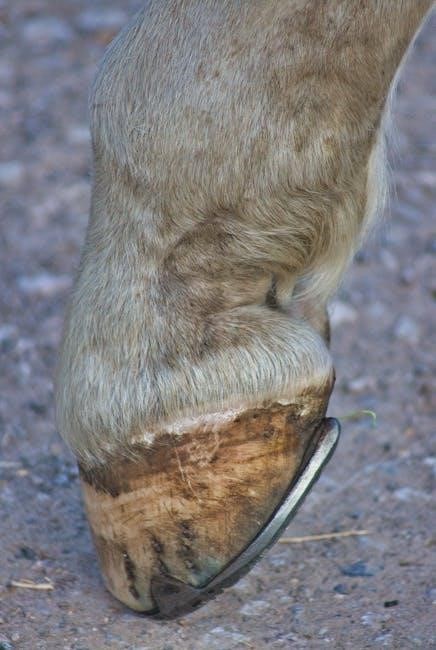
To accurately measure hoof length for Cavallo boot sizing, begin at the toe – the furthest point from the heel. Place the hoof measuring ruler (or measuring tape) along the hoof, starting at the toe and extending straight back to the deepest point of the heel sulcus. This is the concavity at the back of the hoof, where the heel meets the ground when weight-bearing.
Ensure the ruler remains parallel to the hoof wall throughout the measurement process. Avoid angling the ruler, as this will result in an inaccurate reading. Record the measurement in inches or millimeters, depending on the ruler used. It’s crucial to measure all four hooves individually, as variations in size are common.
For size 3 boots, the hoof length should fall between 4 15/16 and 5 3/16 inches. Remember, this is a guideline; always refer to the official Cavallo sizing chart for the most accurate size determination. Consistent technique is key for reliable results.
Measuring Hoof Width
Accurate hoof width measurement is vital for a comfortable and secure Cavallo boot fit. To begin, position the hoof flat on a level surface. Using a hoof measuring ruler or tape, measure across the widest part of the hoof – typically from side to side, just behind the widest point of the frog.
Ensure the measuring tool is perpendicular to the hoof wall, creating a straight line across the hoof. Record this measurement in inches or millimeters. As with hoof length, measure all four hooves individually, noting any discrepancies. Comparing the width measurement to the length measurement is crucial for determining hoof shape.
If the width is smaller than the length, the hoof is considered oval-shaped, resulting in a slimmer boot fit. Conversely, if the width is equal to or up to one Cavallo hoof boot size larger than the length, the fit will be more accommodating. This distinction impacts boot selection and overall comfort.
Determining Hoof Shape: Oval vs. Round
Understanding your horse’s hoof shape – whether oval or round – is paramount for selecting the correct Cavallo hoof boot size and achieving an optimal fit. This determination directly influences the boot’s comfort and performance.
Compare the hoof length and width measurements obtained previously. If the hoof’s width is noticeably smaller than its length, it’s classified as an oval-shaped hoof. These hooves generally benefit from a “slim fit” provided by certain Cavallo models. Conversely, if the width is equal to the length, or even up to one full Cavallo boot size larger, the hoof is considered round.
Rounder hooves require a boot with a wider profile to prevent rubbing and ensure adequate coverage. Ignoring hoof shape can lead to ill-fitting boots, causing discomfort, potential sores, and even boot loss during use. Accurate assessment is therefore a critical step in the fitting process.
Cavallo Boot Sizing Charts: A Detailed Look
Cavallo offers comprehensive sizing charts to guide you through selecting the appropriate boot size for your horse. These charts correlate hoof length and width measurements with specific boot sizes, ranging from the smallest M1 to larger sizes exceeding size 4. It’s crucial to consult the official Cavallo sizing guide, as variations can exist between different boot models (e.g., Trek, Simple).
Generally, size 3 Cavallo boots are designed to accommodate hooves measuring between 4 15/16 inches and 5 3/16 inches in length. The M1 to M4 range represents a progression in size, catering to increasing hoof dimensions. Remember that these are guidelines; individual hoof conformation and shape (oval vs. round) also play a vital role.
When using the charts, prioritize hoof length as the primary measurement. Width is then used to refine the fit, particularly for oval-shaped hooves. Always double-check your measurements and consider erring on the side of a slightly larger size if your horse is between sizes.
Size 0 ⎻ M1: Specific Measurements & Horse Breed Considerations
Cavallo’s M1 size, often considered the starting point, is ideal for ponies and smaller horses with hoof lengths typically falling within a precise range. While specific length measurements for Size 0 aren’t readily available, M1 generally fits hooves around 3 3/4 inches to 4 inches long. Width is also a key factor; a narrower hoof will suit this size best.
Breed considerations are important. This size frequently accommodates breeds like Welsh ponies, miniature horses, and smaller Icelandic horses. However, individual hoof size varies within breeds, so accurate measurement is paramount. A slim fit is expected if the hoof width is less than its length, characteristic of oval-shaped hooves.
When selecting M1, ensure the boot doesn’t extend beyond the hoof wall’s bearing surface. Proper fit prevents rubbing and ensures optimal protection. Remember to account for any flares or irregularities in the hoof shape during measurement. Always prioritize a secure, comfortable fit for your equine partner.
Size 1 ⎯ M2: Specific Measurements & Horse Breed Considerations
Cavallo’s M2 size caters to horses with slightly larger hooves than those fitting into M1. Generally, an M2 boot is designed for a hoof length between 4 1/8 inches and 4 3/8 inches. As with all sizes, width plays a crucial role in achieving a proper fit. Hooves with a width equal to or slightly larger than the length (up to one size larger) will generally fit well within the M2 range.
Breed-wise, M2 often suits smaller warmbloods, Arabians, and Quarter Horses, though individual variation is significant. Consider the horse’s discipline; horses engaged in more strenuous activities may benefit from a snugger fit within the size range. It’s vital to remember that a “Size to be Determined” option exists if precise measurements are unclear.
When fitting, ensure the boot’s bearing surface aligns with the hoof wall. Avoid excessive movement or rubbing, which could lead to discomfort or injury. Regularly check the fit, especially during transitions between seasons, as hoof size can fluctuate.
Size 2 ⎯ M3: Specific Measurements & Horse Breed Considerations
Cavallo’s M3 size accommodates hooves measuring between 4 3/8 inches and 4 7/16 inches in length. Width remains a critical factor; an oval-shaped hoof (width smaller than length) will experience a slimmer fit, while a wider hoof – equal to or up to one size larger than the length – will fit comfortably. Careful measurement is paramount for optimal performance.
This size frequently suits breeds like larger Quarter Horses, Morgans, and some Thoroughbreds, but individual hoof conformation varies. Horses used for frequent trail riding or those requiring extra protection may benefit from the secure fit offered by the M3. Remember, the “Size to be Determined” option is available if precise measurements prove challenging.

During fitting, confirm the boot’s bearing surface fully supports the hoof wall without causing pressure points. Regularly inspect for rubbing or slippage, adjusting as needed. Hoof size can change with activity and environmental conditions, necessitating periodic fit checks.
Size 3 ⎯ M4: Specific Measurements & Horse Breed Considerations
Cavallo’s Size 3 is designed for hooves measuring 4 15/16 to 5 3/16 inches in length. As with all sizes, hoof width is crucial. Oval-shaped hooves (width less than length) will experience a snugger fit, while wider hooves – matching or exceeding length by one size – require careful consideration. Accurate measurement prevents discomfort and ensures optimal boot performance.
This size often fits breeds like larger Thoroughbreds, Warmbloods, and draft crosses. Horses engaged in demanding work, or those prone to abscesses, benefit from the protection and support offered by the M4. Consider the horse’s activity level and hoof condition when selecting this size.
When fitting, ensure the boot sits flush against the hoof wall without pinching or creating pressure points. Check for adequate heel support and confirm the boot doesn’t rotate during movement. If unsure, utilize the “Size to be Determined” option for personalized assistance.
Size 4 & Above: Considerations for Larger Hooves
Cavallo hoof boots in Size 4 and above cater to horses with significantly larger hooves, commonly found in draft breeds like Clydesdales, Shires, and Percherons, as well as larger Warmbloods. Precise measurements are paramount, as variations in hoof size within these breeds are substantial. Beyond Size 4, sizing becomes less standardized, often requiring the “Size to be Determined” option for a custom fit.
When measuring, pay close attention to both length and width. Larger hooves often present unique challenges, such as flared walls or uneven weight distribution. Ensure the boot provides complete coverage and doesn’t impinge on the frog or sole. Proper fit is crucial to prevent rubbing and potential abscess formation.
Consider the intended use. Horses working in challenging terrain or carrying heavier loads require a more secure and supportive fit. Regularly inspect boots for wear and tear, and replace them as needed to maintain optimal hoof protection and comfort.
The “Size to be Determined” Option
Cavallo offers a convenient “Size to be Determined” option for horse owners unsure of their horse’s exact boot size, or for those with uniquely shaped hooves. This allows you to purchase boots without immediate sizing, providing flexibility and avoiding the risk of ordering an incorrect size initially. It’s particularly useful for horses with hooves falling between standard sizes, or for those undergoing hoof rehabilitation where size may fluctuate.
Upon selecting this option, Cavallo will contact you to request detailed hoof measurements – length and width are essential, alongside photos if possible. Their experienced team will then analyze the information and recommend the most appropriate size and model for your horse.
This personalized approach ensures a secure and comfortable fit, maximizing the benefits of the hoof boot. While it may involve a slightly longer processing time, the “Size to be Determined” option minimizes returns and guarantees optimal hoof protection.
Fitting the Boot: Ensuring a Secure and Comfortable Fit
Achieving a proper fit is crucial for optimal Cavallo hoof boot performance. Begin by ensuring the hoof is clean and dry. The boot should slide onto the hoof with moderate effort – not too tight, nor excessively loose. A snug fit prevents rubbing and ensures the boot stays securely in place during movement.
Once applied, check for heel slippage. Minimal movement is acceptable, but excessive slippage indicates the boot is too large. Observe the boot’s overall alignment; it should follow the natural contours of the hoof wall. Pay attention to the breakover point, ensuring it doesn’t interfere with natural hoof function.
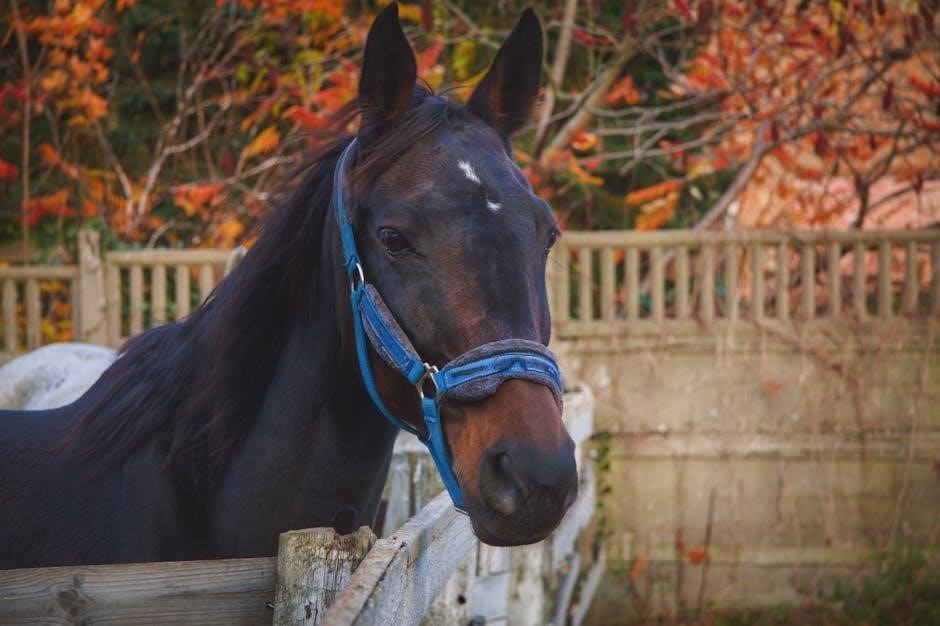
After initial fitting, encourage the horse to walk and trot on various surfaces. Monitor for any signs of discomfort, such as lameness or reluctance to move. Regular checks are vital, especially during the initial break-in period, to confirm continued comfort and proper fit.
Addressing Common Fitting Issues

One frequent issue is heel slippage, often indicating a boot that’s too large. Consider using a thicker pad or adjusting the fastening straps for a more secure fit. Conversely, if the boot is difficult to apply, or causes bulging at the sides, it may be too small – a larger size or different model might be necessary.
Oval-shaped hooves often require a ‘slim fit’ due to their narrower width compared to length. If experiencing rubbing, ensure the hoof is properly trimmed and consider using a liner to provide cushioning. Boots rotating during movement can be addressed by tightening straps or utilizing a more supportive boot style.
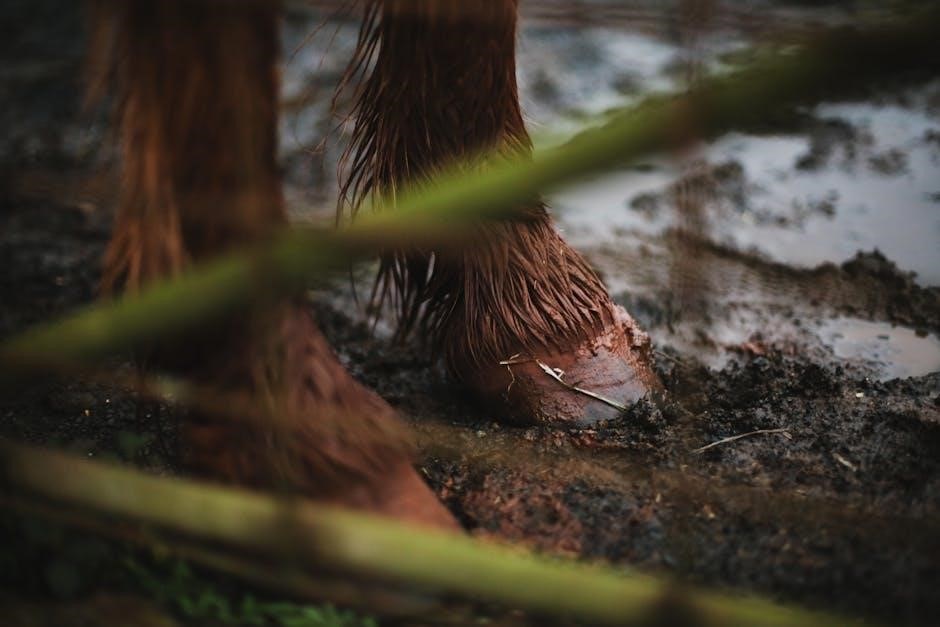
For horses with contracted heels, ensure the boot doesn’t exacerbate the condition. Consult with a farrier for appropriate trimming and consider boots designed to provide heel support. Remember, a properly fitted boot should enhance comfort and protection, not create new problems.
Cavallo Boot Models & Size Variations (e.g., Trek, Simple)
Cavallo offers diverse boot models, each with slight sizing nuances. The Trek boot, designed for demanding trail use, generally fits true to size, but consider a half-size up for wider hooves. The Simple boot, a popular choice for everyday use and comfort, also follows standard sizing, though some users find it runs slightly narrow.
It’s crucial to consult the specific size chart for each model, as variations exist. For instance, a Size 3 in the Simple boot fits hooves measuring 4 15/16 to 5 3/16 inches in length. Always prioritize length measurements, adjusting for width as needed. Remember that oval-shaped hooves may require a slimmer fit within the same size.
Beyond Trek and Simple, other models like the Affinity and Derby offer unique features and potentially different fit characteristics. Utilizing Cavallo’s online resources and contacting their customer support can provide tailored guidance for selecting the optimal model and size for your horse’s individual hoof conformation.
Care and Maintenance for Optimal Boot Performance
Cavallo hoof boots require consistent care to ensure longevity and optimal performance. After each use, thoroughly clean the boots with mild soap and water, removing dirt, debris, and any potential irritants. Inspect the boots for wear and tear, paying close attention to the straps, soles, and upper materials.
Allow the boots to air dry completely, away from direct sunlight or heat sources, which can damage the materials. Regularly check and tighten any loose screws or rivets. For prolonged storage, clean and dry the boots before storing them in a cool, dry place. Avoid storing them in direct contact with rubber or plastic, as this can cause deterioration.
Periodic conditioning of the leather components (if applicable) can help maintain their flexibility and prevent cracking. Following these simple maintenance steps will maximize the lifespan of your Cavallo boots and ensure a secure, comfortable fit for your horse, ride after ride.
Where to Purchase Cavallo Hoof Boots & Get Assistance
Cavallo hoof boots are widely available through a variety of retailers, both online and in brick-and-mortar stores. You can find them directly on the official Cavallo website, offering the full range of models and sizes. Major online retailers like Amazon also carry a selection of Cavallo boots, providing convenient purchasing options and often competitive pricing.

Additionally, many tack shops and equestrian supply stores stock Cavallo products. For personalized assistance with sizing and fitting, contacting Cavallo directly is highly recommended. Their customer support team can provide expert guidance and help you determine the best boot model and size for your horse’s unique hoof conformation.
Websites like horseandmore.co.uk also offer resources and support. Don’t hesitate to reach out to their knowledgeable staff for assistance. Remember, proper fit is crucial for optimal performance and comfort, so utilizing available resources is a wise investment.