
Manual Elevator: A Comprehensive Overview
Manual elevators, relying on physical effort or simple mechanical systems, offer a fascinating glimpse into vertical transport history. These systems prioritize safety through robust mechanical safety brakes and dependable door lock mechanisms.

Manual elevators represent a foundational technology in vertical transportation, predating the sophisticated automatic systems prevalent today. Unlike their automated counterparts, these elevators depend on human power, or relatively simple mechanical advantages, for operation. This reliance necessitates a keen understanding of their operational principles and inherent safety features.
Historically, manual elevators were essential for accessing multiple floors in buildings lacking the infrastructure for more complex systems. Their design prioritizes reliability and safety, incorporating features like robust door lock mechanisms – ensuring doors remain securely closed during transit – and crucial mechanical safety brakes, designed to prevent freefall even in power failures.
Understanding manual elevators isn’t merely a historical exercise; it provides valuable insight into the evolution of elevator technology and the fundamental principles that underpin all vertical transport systems. They showcase a simpler, yet effective, approach to overcoming architectural limitations.
Historical Context of Manual Elevators
The earliest forms of manual elevators date back centuries, initially employing human or animal power to lift materials and, eventually, people. These rudimentary systems were crucial before the advent of steam and electric power, serving as the primary means of vertical transport in multi-story structures.
Throughout the 19th century, as buildings grew taller, more sophisticated manual elevators emerged, often utilizing rope and pulley systems operated by dedicated elevator operators. These operators skillfully managed the ascent and descent, ensuring passenger safety and efficient transport. The development of improved hoisting ropes was also critical during this period.
The need for reliable door lock mechanisms and mechanical safety brakes became paramount as elevator heights increased, driving innovation in safety features. While eventually superseded by automatic systems, manual elevators laid the groundwork for modern elevator technology, establishing fundamental safety standards and operational principles.
Components of a Manual Elevator System
A manual elevator system, though simpler than its automatic counterparts, comprises several key components working in concert. Central to its operation are the hoisting ropes – durable wire cables engineered to bear the car’s weight and passenger load, often utilizing multiple ropes for redundancy and increased traction.
The door lock mechanisms are vital, employing auto-closing lock hooks to secure landing doors and prevent movement unless properly engaged, completing the electrical circuit. Equally crucial are the mechanical safety brakes, designed to activate in all situations, even during power failures, ensuring passenger security.
Beyond these, a manual system includes the elevator car itself, guide rails for smooth vertical travel, and a manual control system, potentially incorporating an emergency power operation panel for controlled descent.

Hoisting Ropes and Their Load Capacity
Hoisting ropes are specialized wire cables, meticulously designed for the demanding task of elevating and lowering elevator cars. These ropes aren’t simply about lifting weight; they’re engineered to handle both the car’s structure and the dynamic live load – the weight of passengers and any cargo within the car.
To ensure safety and reliability, manual elevator systems frequently employ multiple ropes working in parallel. This redundancy isn’t just a precaution; it significantly increases traction and provides a crucial safety factor. The load capacity of these ropes is determined by factors like cable diameter, material strength, and the number of ropes utilized.
Regular inspection of hoisting ropes is paramount, checking for wear, corrosion, and any signs of damage to maintain optimal performance and passenger safety.
Door Lock Mechanisms and Safety Features
The door lock mechanism is a critical safety component in any manual elevator system, ensuring secure closure during operation. Typically, this involves an auto-closing lock hook, often spring-loaded, which firmly secures the landing doors when the elevator isn’t in use.
A key safety interlock prevents the elevator car from moving unless the doors are completely and correctly locked. This electrical circuit completion is essential; it prevents accidental movement with open doors or misalignment at landings, mitigating potential accidents.
While seemingly simple in design, the door lock system is fundamentally crucial for passenger safety during every elevator trip. Regular maintenance and inspection of these mechanisms are vital to guarantee their continued reliable function and prevent malfunctions.
Mechanical Safety Brakes: Ensuring Passenger Security
Mechanical safety brakes are paramount in manual elevator systems, providing a crucial layer of protection even during power failures or component malfunctions. These brakes are designed to engage automatically, preventing uncontrolled descent or ascent of the elevator car.
The system’s reliability ensures passenger safety in all situations, offering peace of mind. These brakes operate independently of the elevator’s primary power source, guaranteeing functionality even when electricity is unavailable. This redundancy is a cornerstone of elevator safety design.
Regular inspection and maintenance of these mechanical safety brakes are essential to confirm their operational readiness. Proper functioning is vital for preventing accidents and ensuring the continued safe operation of the manual elevator.

Manual Elevator Operation: Principles and Procedures
Manual elevator operation, distinct from automated systems, relies on a direct connection between operator action and elevator movement. Typically, this involves a hand-crank or lever system that controls the hoisting mechanism, requiring physical exertion for vertical transport.
Understanding the principles of operation is crucial for safe and efficient use. Operators must be trained in proper procedures, including controlled ascent and descent techniques. Careful coordination is essential to avoid abrupt movements or unintended stops.
In emergency scenarios, manual lowering procedures to the main lobby become vital. These often involve a dedicated control panel and key switch, allowing for a controlled descent even without primary power. Prioritized safety protocols are essential during these operations.
Emergency Power Operation and Control Panels
Manual elevator systems often incorporate emergency power operation to ensure functionality during power outages. This typically involves a dedicated power source and a secured control panel, accessible only to authorized personnel.
The control panel allows for the selective operation of individual elevators, enabling a controlled descent to the main lobby. Utilizing a key switch, operators can manually lower the car, prioritizing passenger safety and preventing entrapment.
Proper training on emergency power procedures is paramount. Operators must understand the panel’s layout, switch functions, and the step-by-step process for safely lowering the elevator. Regular drills and maintenance of the emergency system are crucial for reliability.
Manual Lowering Procedures to the Main Lobby
In the event of a power failure affecting a manual elevator, a specific procedure must be followed for safe descent to the main lobby. After activating the emergency power system and accessing the designated control panel, the operator selects the affected elevator.
Using a key switch, the operator initiates a controlled, manual lowering process. This requires careful monitoring of the elevator’s movement and adherence to established speed limits. Communication with passengers is vital throughout the process, providing reassurance and instructions.
The operator continues lowering the elevator until it reaches the main lobby level, ensuring a smooth and controlled stop. Following a successful descent, the system should be thoroughly inspected before returning to normal operation.
Safety Standards and Regulations
Manual elevator safety is paramount, governed by stringent standards to protect passengers and personnel. The ASME A17.1/CSA B44-2025 Safety Code serves as the foundational document for design, construction, installation, operation, and maintenance.
Critical safety components include robust governor systems, designed to prevent overspeed during descent, and a readily accessible controller and machine disconnect switch for immediate power shutdown in emergencies. These systems work in concert to mitigate risks.
Regular inspections and adherence to these regulations are crucial. Proper functioning of door lock mechanisms and mechanical safety brakes are non-negotiable, ensuring a safe and reliable vertical transportation experience.
ASME A17.1/CSA B44-2025 Safety Code
The ASME A17.1/CSA B44-2025 Safety Code is the cornerstone of manual elevator safety, dictating comprehensive guidelines for every stage of an elevator’s lifecycle. This code covers design, construction, installation, operation, testing, inspection, maintenance, alteration, and repair procedures.
Adherence ensures consistent safety levels across all manual elevator systems. It mandates specific requirements for components like hoisting ropes, door lock mechanisms, and mechanical safety brakes, detailing acceptable load capacities and operational standards.
Regular updates reflect advancements in safety technology and best practices. Compliance with this code is not merely recommended; it’s essential for legal operation and, most importantly, passenger well-being.
Governor Systems and Their Role in Safety
Governor systems are critical safety components in manual elevators, designed to prevent overspeeding during descent. These systems continuously monitor the elevator car’s speed and automatically activate the mechanical safety brakes if a pre-set limit is exceeded.
Regardless of the manual elevator type, a governor is a standard feature, providing a crucial layer of redundancy. The governor’s operation is independent of the elevator’s control system, ensuring functionality even in the event of electrical failure or component malfunction.
Regular inspection and maintenance of the governor are paramount to ensure its reliable operation. Proper functioning directly correlates to passenger safety, making it a non-negotiable aspect of manual elevator upkeep.
Controller and Machine Disconnect Switch Functionality

The controller in a manual elevator system, though simpler than in automatic systems, manages basic operations and safety features. It interfaces with the door lock mechanisms and the governor system, ensuring coordinated movement and preventing operation with unlocked doors.
Crucially, a machine disconnect switch provides a means to isolate the elevator’s power source during maintenance or emergencies. This switch completely de-energizes the hoisting motor, preventing accidental operation while work is being performed.
Proper functionality of both the controller and disconnect switch is vital for safe operation and maintenance. Regular testing and adherence to ASME A17.1/CSA B44-2025 standards are essential to guarantee their reliability and protect personnel.
Maintenance and Inspection of Manual Elevators
Consistent maintenance and inspection are paramount for ensuring the continued safe operation of manual elevators. Regular inspection checklists should encompass thorough examinations of hoisting ropes for wear, the functionality of door lock mechanisms, and the responsiveness of mechanical safety brakes;
Preventative maintenance schedules should be established, including lubrication of moving parts, tightening of connections, and periodic testing of the governor system and controller. Adherence to ASME A17.1/CSA B44-2025 guidelines is crucial.
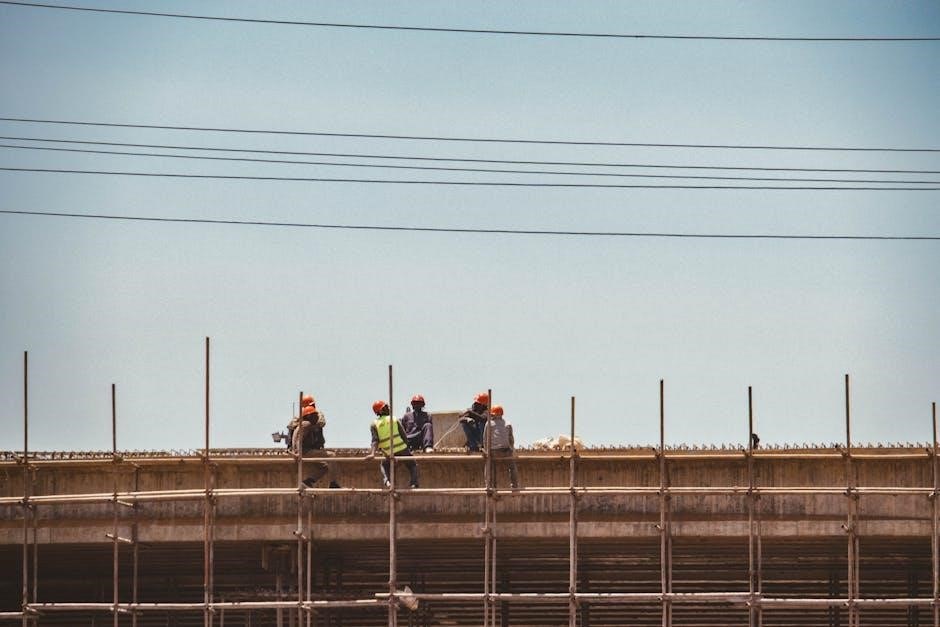
Detailed records of all inspections and maintenance activities must be maintained, providing a historical overview of the elevator’s condition and facilitating proactive identification of potential issues before they escalate into safety hazards.
Regular Inspection Checklists
A comprehensive regular inspection checklist for manual elevators must prioritize safety-critical components. This includes a detailed assessment of hoisting ropes – checking for fraying, corrosion, and proper tension. The functionality of the door lock mechanisms should be verified, ensuring secure engagement and disengagement during operation.
Mechanical safety brakes require rigorous testing to confirm immediate and reliable activation. The governor system needs inspection for proper speed regulation. Examination of the controller and machine disconnect switch is vital, verifying correct operation.
Documentation should include checks for proper lighting, emergency communication systems, and the overall structural integrity of the elevator car and shaft. Any discrepancies must be immediately addressed and recorded.
Preventative Maintenance Schedules
Establishing a robust preventative maintenance schedule is crucial for manual elevator longevity and safety. This should include monthly lubrication of all moving parts, focusing on the winch mechanism and door lock components. Quarterly inspections should encompass a thorough examination of the hoisting ropes for wear and tear, alongside adjustments to tension as needed.
Semi-annual checks must verify the functionality of mechanical safety brakes and the governor system, ensuring they respond correctly to overspeed conditions. Annual maintenance should involve a complete system review, including the controller and machine disconnect switch.
Detailed records of all maintenance activities are essential for tracking performance and identifying potential issues before they escalate.
Troubleshooting Common Issues
Manual elevator systems, while robust, can experience issues. Addressing door lock malfunctions often involves cleaning and lubricating the auto-closing lock hook, or replacing worn springs. If the doors fail to latch, the electrical circuit won’t complete, preventing movement – a key safety feature.

Dealing with hoisting rope concerns requires careful inspection for fraying or damage. Never attempt repairs yourself; qualified personnel must assess rope integrity and replace if necessary. Unusual noises during operation could indicate winch mechanism problems or brake issues.
Regularly check the emergency power operation panel to ensure functionality. A failed system could hinder manual lowering procedures during a power outage.
Addressing Door Lock Malfunctions
Door lock malfunctions in manual elevators are critical safety concerns demanding immediate attention. The primary component, the auto-closing lock hook, often fails due to dirt accumulation or spring fatigue. Initial troubleshooting involves thorough cleaning and lubrication of the hook mechanism, ensuring smooth operation.
Inspect the landing doors for proper alignment; misalignment can prevent secure latching. If the spring is weakened, replacement is necessary. A faulty lock prevents the elevator’s electrical circuit from completing, halting car movement – a vital safety feature.
Never bypass or disable the door lock system. Always prioritize professional inspection and repair to maintain passenger safety and adhere to ASME A17.1/CSA B44-2025 standards.
Dealing with Hoisting Rope Concerns
Hoisting rope integrity is paramount in manual elevator safety. Regular visual inspections are crucial, looking for fraying, corrosion, or broken wires. These wire cables are designed for significant loads, including the car’s weight and passenger capacity, but require diligent monitoring.
Multiple ropes provide redundancy and a safety factor; however, any damage to a single rope compromises the system. Address any concerns immediately – do not operate the elevator with suspect ropes. Professional inspection is vital to assess rope condition and remaining lifespan.
Replacement should adhere strictly to manufacturer specifications and relevant safety codes like ASME A17.1/CSA B44-2025. Proper tension and lubrication are also essential for extending rope life and ensuring smooth operation.
Future Trends in Manual Elevator Technology
While largely superseded by automatic systems, manual elevators aren’t entirely stagnant. Current trends focus on enhancing safety and reliability through modernized components. Retrofitting existing manual elevators with advanced governor systems and improved door lock mechanisms is a key area of development.

Integrating simplified, backup power solutions – beyond basic emergency power operation – offers increased resilience. Exploration of lightweight, high-strength materials for hoisting ropes could improve efficiency and reduce maintenance. Furthermore, smart sensors monitoring rope tension and wear could provide predictive maintenance alerts.

Though full automation isn’t the goal, incorporating limited electronic assistance for smoother operation or enhanced safety features remains a possibility, blending traditional mechanics with modern technology.
Comparison with Automatic Elevator Systems
Automatic elevator systems vastly differ from manual elevators in operation and complexity. Automatic systems utilize electric motors, sophisticated controllers, and automated door lock mechanisms for seamless, push-button transport. They offer speed, convenience, and the ability to serve numerous floors efficiently.
Manual elevators, conversely, rely on physical effort or simple mechanical means, prioritizing a direct, tactile experience. While slower and limited in capacity, they offer inherent redundancy – lacking complex electronics susceptible to failure. Mechanical safety brakes are crucial in both, but automatic systems add layers of electronic safety features.
Cost-effectively, manual systems have lower initial and maintenance expenses, but lack the accessibility and convenience of their automated counterparts. Ultimately, the choice depends on specific needs and priorities.